
Friday, May 5, 2017
Monday, March 20, 2017
News: "55 per dag: afgelopen drie jaar meer dan 58.000 nummerplaten gestolen" (De Morgen)
55 per dag: afgelopen drie jaar meer dan 58.000 nummerplaten gestolen
De afgelopen drie jaar zijn er 58.878 kentekenplaten van auto's en moto's gestolen. Dat blijkt uit cijfers die CD&V-Kamerlid Franky Demon opvroeg.Het aantal gestolen platen bleef tijdens die periode wel ongeveer stabiel. In 2013, 2014 en 2015 werden jaarlijks gemiddeld 19.626 kentekenplaten gestolen. Dat het aantal gestolen nummerplaten stabiel blijft, ziet Demon niet direct als een positief gegeven. "Deze diefstallen moeten omlaag. Vandaag wordt te weinig stilgestaan bij de gevolgen die de diefstal van een nummerplaat met zich meebrengt. Burgers moeten hierover beter geïnformeerd worden", zegt hij.
De gevolgen van een gestolen kentekenplaat zijn niet min. Eerst en vooral komt er een hele administratieve rompslomp bij kijken voor de eigenaar van de gestolen nummerplaat. Bij aangifte van diefstal wordt de kentekenplaat geschrapt uit het voertuigenregister en moet het slachtoffer wachten op een nieuwe nummerplaat waardoor hij even niet de baan op kan.
De meeste nummerplaten worden niet per se gebruikt om op een gestolen wagen of vluchtauto te hangen. Heel vaak worden ze ook gebruikt om onbetaald te gaan tanken of om aan snelheidsboetes te ontsnappen. "Dit betekent dan ook dat die boetes bij de eigenaar van de kentekenplaat terechtkomen die op die manier nog eens slachtoffer wordt. Bovendien kan de echte dader zo zelden opgepakt worden", geeft Demon nog mee.
Bron: DeMorgen.be

News: "Près de 59.000 plaques d'immatriculation volées en 3 ans" (SudInfo.be)
Près de 59.000 plaques d'immatriculation volées en 3 ans
Entre 2013 et 2015, 58.878 plaques d’immatriculation ont été volées en Belgique, ressort-il de chiffres communiqués par le député CD&V Franky Demon.
Les chiffres sont restés stables d’une année
à l’autre, 19.626 plaques ayant été dérobées en moyenne chaque année.
Cette stabilité n’est pas forcément une bonne nouvelle car «les chiffres
doivent baisser. A l’heure actuelle, on ignore trop souvent
les conséquences du vol d’une plaque d’immatriculation. Les citoyens
doivent en être mieux informés», a souligné Franky Demon.
Ces plaques volées sont la plupart du temps utilisées pour passer à la pompe sans payer ou pour échapper à des amendes pour excès de vitesse.
Source: SudInfo.be
Ces plaques volées sont la plupart du temps utilisées pour passer à la pompe sans payer ou pour échapper à des amendes pour excès de vitesse.
Source: SudInfo.be
Tuesday, February 28, 2017
News: "De nummerplaat van deze West-Vlaamse psychiater is wel erg opvallend: 'Sommigen steken hun middelvinger op'" (nieuwsblad.be)
De nummerplaat van deze West-Vlaamse psychiater is wel erg opvallend: “Sommigen steken hun middelvinger op”

Beernem - God is een psychiater en woont in het West-Vlaamse
Beernem. Tenminste als we op de nummerplaat mogen afgaan. Tom
Herregodts (foto) vond inspiratie voor zijn gepersonaliseerde
nummerplaat in zijn familienaam, maar ook zijn achtergrond als
psychiater bracht hem tot de opvallende keuze.

Bron: nieuwsblad.be
Tuesday, January 31, 2017
News: "Plaques personnalisées à 2.000€: voici la région où il y a le plus de demandes" (RTLInfo.be)
(English version below)
Il est possible d'obtenir une plaque d'immatriculation personnalisée depuis 2014 contre une rétribution de 2.000 euros. La majorité des demandes ont été introduites par des habitants de la Flandre. Sur les 12.956 attribuées depuis l'entrée en vigueur de ce système, 9.153 l'ont été au nord du pays, d'après des chiffres que la députée Daphné Dumery (N-VA) a obtenus du ministre de la Mobilité François Bellot (MR).
La plupart des demandes ont été introduites en province d'Anvers (2.887). La Flandre orientale figure en deuxième position avec 1.918 plaques personnalisées. A titre de comparaison, 2.159 plaques de ce type ont été demandées en Wallonie.
Une tendance à la baisse des demandes a été constatée lors des derniers mois. Elle est probablement liée à l'augmentation du coût passé de 1.000 à 2.000 euros. La Direction Immatriculation des Véhicules (DIV) a récolté 15,3 millions grâce aux plaques personnalisées, selon Mme Dumery.
Source: RTLInfo.be
————————————
Translation (© SL – belgianlicenceplates.blogspot.com):
Since 2014 it has been possible to get a vanity licence plate for a 2,000 euros fee. Most applications were issued by Flemish residents. Out of the 12,956 applications that have been processed since the introduction of the system, 9,153 came from the northern side of the country, according to statistics that MP Daphné Dumery (N-VA) received from Mobility Minister François Bellot (MR).
Most applications came from the Province of Antwerp (2,887). The Province of East-Flanders comes second with 1,918 vanity plates. On the other hand, only 2,159 examples of such plates were applied for in Wallonia.
There has been a decrease in terms of applications in the last few months. It probably stems from the fact that the application fee rose from 1,000 to 2,000 euros. The Vehicles Registration Service (DIV) raised 15,3 million euros thanks to vanity plates, according to Mrs Dumery.
Il est possible d'obtenir une plaque d'immatriculation personnalisée depuis 2014 contre une rétribution de 2.000 euros. La majorité des demandes ont été introduites par des habitants de la Flandre. Sur les 12.956 attribuées depuis l'entrée en vigueur de ce système, 9.153 l'ont été au nord du pays, d'après des chiffres que la députée Daphné Dumery (N-VA) a obtenus du ministre de la Mobilité François Bellot (MR).
La plupart des demandes ont été introduites en province d'Anvers (2.887). La Flandre orientale figure en deuxième position avec 1.918 plaques personnalisées. A titre de comparaison, 2.159 plaques de ce type ont été demandées en Wallonie.
Une tendance à la baisse des demandes a été constatée lors des derniers mois. Elle est probablement liée à l'augmentation du coût passé de 1.000 à 2.000 euros. La Direction Immatriculation des Véhicules (DIV) a récolté 15,3 millions grâce aux plaques personnalisées, selon Mme Dumery.
Source: RTLInfo.be
————————————
Translation (© SL – belgianlicenceplates.blogspot.com):
Since 2014 it has been possible to get a vanity licence plate for a 2,000 euros fee. Most applications were issued by Flemish residents. Out of the 12,956 applications that have been processed since the introduction of the system, 9,153 came from the northern side of the country, according to statistics that MP Daphné Dumery (N-VA) received from Mobility Minister François Bellot (MR).
Most applications came from the Province of Antwerp (2,887). The Province of East-Flanders comes second with 1,918 vanity plates. On the other hand, only 2,159 examples of such plates were applied for in Wallonia.
There has been a decrease in terms of applications in the last few months. It probably stems from the fact that the application fee rose from 1,000 to 2,000 euros. The Vehicles Registration Service (DIV) raised 15,3 million euros thanks to vanity plates, according to Mrs Dumery.
Monday, January 30, 2017
News: "9.000 plaques personnalisées en Flandre, 2.000 en Wallonie" (7sur7.be)
9.000 plaques personnalisées en Flandre, 2.000 en Wallonie

© photo news.
Les plaques d'immatriculation personnalisées, disponibles depuis 2014 contre rétribution, sont principalement demandées en Flandre. Sur les 12.956 attribuées depuis l'entrée en vigueur de ce système, 9.153 l'ont été au nord du pays, d'après des chiffres que la députée Daphné Dumery (N-VA) a obtenus du ministre de la Mobilité François Bellot (MR).
2.000 euros
Une tendance à la baisse des demandes a été constatée lors des derniers mois. Elle est probablement liée à l'augmentation du coût passé de 1.000 à 2.000 euros.
La Direction Immatriculation des Véhicules (DIV) a récolté 15,3 millions grâce aux plaques personnalisées, selon Mme Dumery.
Source: 7sur7.be
Thursday, September 29, 2016
News: "Voici la mini-plaque obligatoire pour les cyclos" (LAvenir.net)
Voici la mini-plaque obligatoire pour les cyclos

La DIV a mis en place une plaque plus petite et adaptée à la taille d’un vélo électrique concernée par la nouvelle réglementation. Elle fait 10 cm sur 12 cm et est désormais disponible.
Ce 1er octobre, un nouveau cadre légal entrera en vigueur et vient mettre de l’ordre dans tout ce qui concerne les cyclomoteurs et les vélos électriques notamment.
Pas de bouleversement pour les vélos électriques et vélos motorisés ne dépassant pas les 25 km/h. Les vélos speed pedelecs sont par contre fortement impactés, comme nous vous l’expliquions la semaine dernière.
Ces vélos, qui développent une puissance inférieure ou égale à 4000 W, avec une vitesse inférieure ou égale à 45 km/h, sont désormais considérés comme des cyclomoteurs. Avec permis et plaque d’immatriculation obligatoires. Date butoir pour se mettre en ordre: le 11 décembre 2016.
La plaque pour les cyclomoteurs taille «moto» (14x21 cm) était un peu grande pour venir garnir l’arrière d’un vélo. La DIV a donc sorti une plaque minéralogique plus petite (10x12 cm), plus adaptée.
Elle comporte 4 lettres et 3 chiffres et commence par un «S». Le prix de cette mini-plaque a été fixé à 30 euros.
Outre les speed pedelecs, les petites voitures sans permis, les quads légers, les cyclomoteurs et les scooters de classe A et B doivent aussi s’équiper de ces plaques.
La deuxième lettre de la plaque permettra d’identifier le type de véhicule: SA pour les cyclomoteurs de classe A, SB pour les cyclomoteurs de classe B, SP pour les speed pedelecs, SU pour les quadricycles légers (voitures sans permis, quads légers…).
Source: http://www.lavenir.net/cnt/dmf20160928_00887689
Friday, September 11, 2015
News: "La plaque d'immatriculation personnalisée coûtera 2.000 euros au lieu de 1.000" (7sur7.be)
La plaque d'immatriculation personnalisée coûtera 2.000 euros au lieu de 1.000

© photo news.
Le coût d'une plaque d'immatriculation personnalisé sera doublé, passant
à 2.000 euros au lieu de 1.000 actuellement, selon un arrêté royal de
la ministre de la Mobilité et des Transports Jacqueline Galant approuvé
vendredi en Conseil des ministres.
Ce texte, envoyé pour avis au Conseil d'Etat, prévoit une série de hausses de tarifs en matière d'enregistrement de véhicules.
Cette modification des redevances répond à deux objectifs, la couverture de certains frais du concessionnaire, actuellement bpost, et une meilleure couverture de certains frais de fonctionnement de la Direction de l'immatriculation des véhicules (DIV).
Au cabinet de la ministre, on rappelle que les tarifs n'avaient plus évolué depuis quinze ans et que ceux-ci restaient à un niveau relativement bas en comparaison avec les pays voisins.
En vertu des nouveaux tarifs, la délivrance d'une marque d'immatriculation (ou un duplicata) est désormais fixée à 30 euros, la délivrance d'une marque d'immatriculation temporaire de courte durée (ou un duplicata) est désormais fixée à 75 euros alors que la délivrance d'un certificat d'immatriculation (ou un duplicata) est fixée à 26 euros
Cette modification des redevances répond à deux objectifs, la couverture de certains frais du concessionnaire, actuellement bpost, et une meilleure couverture de certains frais de fonctionnement de la Direction de l'immatriculation des véhicules (DIV).
Au cabinet de la ministre, on rappelle que les tarifs n'avaient plus évolué depuis quinze ans et que ceux-ci restaient à un niveau relativement bas en comparaison avec les pays voisins.
En vertu des nouveaux tarifs, la délivrance d'une marque d'immatriculation (ou un duplicata) est désormais fixée à 30 euros, la délivrance d'une marque d'immatriculation temporaire de courte durée (ou un duplicata) est désormais fixée à 75 euros alors que la délivrance d'un certificat d'immatriculation (ou un duplicata) est fixée à 26 euros
Source: 7sur7.be
Sunday, March 16, 2014
New Belgian License Plates // Les nouvelles plaques d'immatriculation belges // Nieuwe Belgische nummerplaten
In the course of 2014, the Belgian Office for the Registration of
Vehicles (DIV) will issue several new categories of license plates, as
announced by State Secretary for Mobility Melchior Wathelet on Thursday
13 March 2014.
Summary:
1. Scooters
On 31 March 2014, scooter plates will be introduced. Belgium was the last country in Europe where scooters did not have any registration, which sometimes caused problems when people drove to other countries on their scooters. The new scooter plates will not only solve this issue, but also make scooter owners identifiable (e.g. in the event of an accident or speeding).
A distinction is made between A-class scooters (speed limit: 25 km/h) and B-class scooters (speed limit: 45 km/h).


Plates for oldtimer scooters (i.e. aged 25 or more), taxis and diplomats will follow later (see also below):
2. Motorcycles
On
30 June 2014In October 2014, new combinations for motorcycles will appear. Since 15
November 2010, all registrations started with the index digit 1,
followed by a group of three letters starting with M, fo three digits
(e.g. 1-MXX-111). In
keeping with the idea of introducing index letters to distinguish the
different categories of vehicles, motorcycles will henceforth have a
registration starting with the index letter M, followed by three serial
letters above three serial digits (e.g. M-XXX-111). There will be no subcategories. 15,609,375 combinations will be available.

3. Oldtimers
As of30 June 2014 October 2014, oldtimers will get a new range of combinations,
similar to motorcycle plates. Since 15 November 2010, all registrations
started with the index digit 1,
followed by a group of three letters starting with O, followed by three digits
(e.g. 1-OXX-111). In keeping with the idea of introducing index letters
to distinguish the different categories of vehicles, motorcycles will
henceforth have a registration starting with the index letter O,
followed by three serial letters above three serial digits (e.g. O-XXX-111).

A few subcategories will be created (X and 1 stand for any letter and digit, respectively):
4. Trailers
Trailers, too, will be issued a new type of registration, just like the aforementioned categories, as of30 June 2014 October 2014. Since 15 November 2010,
all registrations started with the index digit 1,
followed by a group of three letters starting with Q, followed by three digits
(e.g. 1-QXX-111). In keeping with the idea of introducing index letters
to distinguish the different categories of vehicles, motorcycles will
henceforth have a registration starting with the index letter Q,
followed by three serial letters above three serial digits (e.g. Q-XXX-111). There will be no subcategories. 15,609,375 combinations will be available.

5. Taxis
Another type of plates will be adapted on30 June 2014 October 2014: taxi plates. Since 15
November 2010, all taxi registrations started with the index digit 1,
followed by a group of three letters starting with TX, followed by three
digits
(e.g. 1-TXX-111). In keeping with the idea of introducing index letters
to distinguish the different categories of vehicles, motorcycles will
henceforth have a registration starting with the index letter Q,
followed by three serial letters starting with X above three serial digits (e.g. T-XXX-111).

A few series are reserved for scooters used as taxis:
6. Rental cars with chauffeur
A last category will undergo a changeon 30 June 2014 in October 2014: plates for rental
cars with chauffeur. Since 15 November 2010, all rental cars with
chauffeur registrations started with the index digit 1,
followed by a group of three letters starting with TXL, TXR, TXH or TXV, followed by three digits
(e.g. 1-TXL-111), or the index digit 2 followed by the letters TXL (e.g. 2-TXL-111). In keeping with the idea of introducing index letters
to distinguish the different categories of vehicles, motorcycles will
henceforth have a registration starting with the index letter T,
followed by three serial letters starting with L above three serial digits (e.g. T-LXX-111). 624,975 combinations will be available.

7. Professional plates: technical checkup
Since 1997, dealers have had the possibility to apply for so-called 'road tests plates' (plates with a registration starting with ZZ*, ZZ* or 1-ZZ*) in order to check whether their vehicles were technically able to drive on the road. Unfortunately, unscrupulous dealers decided to rent these plates to people who wanted to go to official technical check facilities (e.g. for homologation) but had no regular plates to do so. It has therefore been decided to put an end to such practices by both clarifying the legislation and limiting the cases in which such technical checkup plates can be used.
Use:
The new registration will start with the index letter Y, followed by another letter indicating the vehicle category, then the last two digits of the year of validity, and finally three serial letters.

By embossing the year directly onto the plate instead of using stickers, it will be easier to detect whether a plate is valid or not. Besides, since these plates will be renewed each year, it will ensure that those commercial plates remain in a decent state (many dealers do not hesitate to drill extra holes in the plates or bend them, which causes them to look ugly).
The following subcategories will be created (X and 1 stand for any letter and digit, respectively):
8. Professional plates: commercial test drives
The uses of the 'ordinary' dealer plates will be redefined as of 1 October 2014 to avoid fraud. The new Z plate (superseding the previous Z**, Z** and 1-Z** plates) is destined to be used by automotive dealers and sellers for the following purposes:

By embossing the year directly onto the plate instead of using stickers, it will be easier to detect whether a plate is valid or not. Besides, since these plates will be renewed each year, it will ensure that those commercial plates remain in a decent state (many dealers do not hesitate to drill extra holes in the plates or bend them, which causes them to look ugly).
The following subcategories will be created (X and 1 stand for any letter and digit, respectively):
9. Temporary transit plates
As of 31 October 2014, the following plate will replace the current generation of temporary plates of short duration introduced on 15 November 2010 (index digit 1 followed by a dash and six serial numbers [e.g. 1-012345]; its validity was indicated by a blue or red sticker for the month and the embossed last two digits of a given year).
The new registration will start with the letter W (standing for 'world'), followed by another letter indicating the vehicle category, then the last two digits of the year of validity, and finally three serial letters.

The following subcategories will be created (X and 1 stand for any letter and digit, respectively):
10. Temporary export plates
A brand-new category of plates will be created to solve a problem. Indeed, until now, people who wanted to sell their car abroad did not have any other solution than using plates from another vehicle (which they sometimes did not even own), illegally rented test drive plates, or resorted to temporary plates from France, Germany or the Netherlands. Thanks to the forthcoming X plate, people will be able to drive their car out of Belgium.
The new registration will start with the letter X (standing for 'export'), followed by another letter indicating the vehicle category, then the last two digits of the year of validity, and finally three serial letters.

It has a validity of maximum 15 days.
The following subcategories will be created (X and 1 stand for any letter and digit, respectively):
11. Temporary national plates
This plate, which is still at project stage, would be a temporary plate with a one-month validity that would be used by individuals who cannot get their vehicle registered because of a given administrative problem or procedure that is taking some time (e.g. compliance upgrade, technical checkup, passing customs).
Uses:
The new registration will start with the letter N (standing for 'national'), followed by another letter indicating the vehicle category, then the last two digits of the year of validity, and finally three serial letters.

The following subcategories will probably be created (X and 1 stand for any letter and digit, respectively):
Summary:
- 31 March 2014: vanity plates (see other entry) and scooter plates (S)
- 30 June 2014: motorcycles (M), oldtimers (O), trailers (Q), taxis (T-X) and rental cars with chauffeur (T-L) EDIT (July 2014): the introduction of these plates has been postponed to October 2014 (at least) because the DIV could not meet the deadline
- 1 October 2014: professional plates (checkups [Y*] and demonstrations [Z*])
- 31 October 2014 (provisional date): temporary [W*] and export plates [X*]
- T.B.D.: national temporary plates [N*]
1. Scooters
On 31 March 2014, scooter plates will be introduced. Belgium was the last country in Europe where scooters did not have any registration, which sometimes caused problems when people drove to other countries on their scooters. The new scooter plates will not only solve this issue, but also make scooter owners identifiable (e.g. in the event of an accident or speeding).
A distinction is made between A-class scooters (speed limit: 25 km/h) and B-class scooters (speed limit: 45 km/h).
- A-class scooters will get combinations ranging from S-AAA-001 to S-AZZ-999 (and S-CAA-001 to S-CZZ-999 if necessary)
- B-class scooters will get combinations ranging from S-BAA-001 to S-BZZ-999
(and S-DAA-001 to S-DZZ-999 if necessary) - Micro cars with bodywork (e.g. Aixams, Ligiers, G-Whizzes) will get combinations ranging from S-UAA-001 to S-UZZ-999 [U stands for 'unusual'; such vehicles fall under the S index letter because they are legally considered as scooters]
Plates for oldtimer scooters (i.e. aged 25 or more), taxis and diplomats will follow later (see also below):
- O-SAX-111: A-class scooters
- O-SBX-111: B-class scooters
- O-SUX-111: micro cars with bodywork
- T-XSA-111: A-class scooters used as taxis
- T-XSB-111: B-class scooters used as taxis
- T-XSU-111: micro cars with bodywork used as taxis (+ T-XSY and T-XSZ for the small format)
- CD-SA-111: A-class scooters used by diplomats (+ CD-SC-111)
- CD-SB-111: B-class scooters used by diplomats (+ CD-SD-111)
- CD-SU-111: micro cars with bodywork used by diplomats (+ CD-SV-111 and CD-SY or SZ for the small format)
2. Motorcycles
3. Oldtimers
As of
A few subcategories will be created (X and 1 stand for any letter and digit, respectively):
- O-AXX-111: ordinary oldtimers (624,375 combinations)
- O-MXX-111: motorcycles (624,375 combinations)
- O-QXX-111: trailers (624,375 combinations)
- O-SXX-111: scooters
- O-SAX-111: A-class scooters (24,975 combinations)
- O-SBX-111: B-class scooters (24,975 combinations)
- O-SUX-111: micro cars with bodywork (24,975 combinations)
4. Trailers
Trailers, too, will be issued a new type of registration, just like the aforementioned categories, as of
5. Taxis
Another type of plates will be adapted on
A few series are reserved for scooters used as taxis:
- T-XSA-111: A-class scooters (999 combinations; if necessary: T-111-XSA)
- T-XSB-111: B-class scooters (999 combinations; if necessary: T-111-XSB)
- T-XSU-111: micro cars with bodywork (+ T-XSY and T-XSZ for the small format)
6. Rental cars with chauffeur
A last category will undergo a change
7. Professional plates: technical checkup
Since 1997, dealers have had the possibility to apply for so-called 'road tests plates' (plates with a registration starting with ZZ*, ZZ* or 1-ZZ*) in order to check whether their vehicles were technically able to drive on the road. Unfortunately, unscrupulous dealers decided to rent these plates to people who wanted to go to official technical check facilities (e.g. for homologation) but had no regular plates to do so. It has therefore been decided to put an end to such practices by both clarifying the legislation and limiting the cases in which such technical checkup plates can be used.
Use:
- only by professionals in the automotive sector (i.e. dealers and their staff)
- test drives after an upkeep, repairs, or for running in a new vehicle
- rides from dealership to the customs
- rides to and from official technical checkup facilities
- rides to a customer's residence to deliver the vehicle to them
- note that the vehicle equipped with a Y license plate does not have to belong to the owner of the Y plate, unlike the Z license plate [see below])
The new registration will start with the index letter Y, followed by another letter indicating the vehicle category, then the last two digits of the year of validity, and finally three serial letters.
By embossing the year directly onto the plate instead of using stickers, it will be easier to detect whether a plate is valid or not. Besides, since these plates will be renewed each year, it will ensure that those commercial plates remain in a decent state (many dealers do not hesitate to drill extra holes in the plates or bend them, which causes them to look ugly).
The following subcategories will be created (X and 1 stand for any letter and digit, respectively):
- YA-11-XXX: cars, vans, trucks
- YE-11-XXX: equipment companies (i.e. those creating security equipment for motor vehicles)
- YM-11-XXX: motorcycles
- YO-11-XXX: museums
- YP-11-XXX: police
- YQ-11-XXX: trailers
- YR-11-XXX: research (i.e. universities and university colleges developing cars or motors)
- YS-11-XXX: scooters
- YT-11-XXX: customs agencies
- YY-11-XXX: SHAPE and NATO (these organizations appear to import a lot of vehicles and they need such a plate to drive these cars from a harbour to the customs)
8. Professional plates: commercial test drives
The uses of the 'ordinary' dealer plates will be redefined as of 1 October 2014 to avoid fraud. The new Z plate (superseding the previous Z**, Z** and 1-Z** plates) is destined to be used by automotive dealers and sellers for the following purposes:
- regular use of a new or used vehicle by the dealer or members of staff
- this vehicle must be the property of the dealer and must have been checked by competent authorities (at official technical checkup facilities)
- commercial test drive with potential customers, on the basis of a signed agreement between the dealer and the potential customers
- loan of a new or used vehicle as a replacement for someone whose vehicle is being checked or upkept at the dealer's, for a maximum duration of 7 days
- the Z plate cannot be used to go to official technical checkup facilities)
- the Z plate cannot be used by vehicles taking part in racing events
By embossing the year directly onto the plate instead of using stickers, it will be easier to detect whether a plate is valid or not. Besides, since these plates will be renewed each year, it will ensure that those commercial plates remain in a decent state (many dealers do not hesitate to drill extra holes in the plates or bend them, which causes them to look ugly).
The following subcategories will be created (X and 1 stand for any letter and digit, respectively):
- ZA-11-XXX: cars, vans, trucks
- ZA-11-AAA to VZZ: rectangular format (13,750 combinations)
- ZA-11-WAA to XZZ: square format (1,250 combinations)
- ZA-11-YAA to ZZZ: small format (1,250 combinations)
- ZM-11-XXX: motorcycles (small format only; 15,625 combinations)
- ZQ-11-XXX: trailers
- ZQ-11-AAA to XZZ: rectangular format (15,000 combinations)
- ZQ-11-YAA to YZZ: square format (625 combinations)
- ZQ-11-ZAA to ZZZ: small format (625 combinations)
- ZS-11-XXX: scooters
- ZS-11-AAA to VZZ: rectangular format (13,750 combinations)
- ZS-11-WAA to XZZ: square format( 1,250 combinations)
- ZS-11-YAA to ZZZ: small format
9. Temporary transit plates
As of 31 October 2014, the following plate will replace the current generation of temporary plates of short duration introduced on 15 November 2010 (index digit 1 followed by a dash and six serial numbers [e.g. 1-012345]; its validity was indicated by a blue or red sticker for the month and the embossed last two digits of a given year).
The new registration will start with the letter W (standing for 'world'), followed by another letter indicating the vehicle category, then the last two digits of the year of validity, and finally three serial letters.
The following subcategories will be created (X and 1 stand for any letter and digit, respectively):
- WA-11-XXX: cars, vans, trucks (15,625 combinations)
- WM-11-XXX: motorcycles (15,625 combinations)
- WQ-11-XXX: trailers (15,625 combinations)
- WS-11-XXX: scooters
- WS-11-AXX: A-class scooters (625 combinations)
- WS-11-BXX: B-class scooters (625 combinations)
- WS-11-UXX: micro cars with bodywork (625 combinations)
- WS-11-UAA to UVZ: rectangular plates (575 combinations)
- WS-11-UWA to UZZ: small plates (100 combinations)
- Blue stickers: if VAT and fees have been paid; validity of 6 months; renewable
- Red stickers: if VAT and fees have not been paid (exemption); validity of 4 months; not renewable
10. Temporary export plates
A brand-new category of plates will be created to solve a problem. Indeed, until now, people who wanted to sell their car abroad did not have any other solution than using plates from another vehicle (which they sometimes did not even own), illegally rented test drive plates, or resorted to temporary plates from France, Germany or the Netherlands. Thanks to the forthcoming X plate, people will be able to drive their car out of Belgium.
The new registration will start with the letter X (standing for 'export'), followed by another letter indicating the vehicle category, then the last two digits of the year of validity, and finally three serial letters.
It has a validity of maximum 15 days.
The following subcategories will be created (X and 1 stand for any letter and digit, respectively):
- XA-11-XXX: cars, vans, trucks (15,625 combinations)
- XM-11-XXX: motorcycles (15,625 combinations)
- XQ-11-XXX: trailers (15,625 combinations)
- XS-11-XXX: scooters
- XS-11-AXX: A-class scooters (625 combinations)
- XS-11-BXX: B-class scooters (625 combinations)
- XS-11-UXX: micro cars with bodywork (625 combinations)
- XS-11-UAA to UVZ: rectangular plates (575 combinations)
- XS-11-UWA to UZZ: small plates (100 combinations)
11. Temporary national plates
This plate, which is still at project stage, would be a temporary plate with a one-month validity that would be used by individuals who cannot get their vehicle registered because of a given administrative problem or procedure that is taking some time (e.g. compliance upgrade, technical checkup, passing customs).
Uses:
- driving to and from an official technical checkup facility
- driving to and from offices in order to obtain a certificate of conformity
- driving to different places in view of exporting the vehicle (e.g. ride to a dealership, the customs, etc.)
- the vehicle equipped with such a plate will have to be insured for at least one month
- only individuals registered in the Belgian National Registry will be able to obtain such a plate
- only the individual who has requested the plate will be allowed to drive the vehicle
- once the limit of validity has been reached, the plate will be crossed off; no renewal will be possible. The vehicle will then have to be registered under an ordinary plate (1-***), a temporary transit plate (W*) or an temporary export plate (X*)
The new registration will start with the letter N (standing for 'national'), followed by another letter indicating the vehicle category, then the last two digits of the year of validity, and finally three serial letters.
The following subcategories will probably be created (X and 1 stand for any letter and digit, respectively):
- NA-11-XXX: cars, vans, trucks (15,625 combinations)
- NM-11-XXX: motorcycles (15,625 combinations)
- NQ-11-XXX: trailers (15,625 combinations)
- NS-11-XXX: scooters (15,625 combinations)
Saturday, March 15, 2014
New Belgian Vanity Plates! // Les nouvelles plaques personnalisées belges ! // Nieuwe gepersonaliseerde platen!
As of Monday 31 March 2014, there will be more possibilities for
vanity plates. Since 16 November 2010, all new vanity plates had to
comply with the standard combination 9-XXX-111 or 9-111-XXX (where X is
any letter and 1 any digit, with a few restrictions depending on the
type of vehicle). The relative lack of freedom was felt as annoying by
potential vanity plates buyers, although the latter were especially
turned off by the index digit 9: a plate such as 9-001-TIM did not look
as nice as if it had been just 001-TIM.
Thanks to initiatives taken by a few license plate afficionados, State Secretary for Mobility Melchior Wathelet has decided to allow a nearly total freedom in the choice of a vanity plate.

Golden rule: any combination consisting of 1 to 8 characters is allowed. Every letter, digit and dash counts as 1 character; between each (group of) letter(s) and (group of) digit(s) comes a dash.

Every vanity plate shall start with the DIV's official seal ('CV' for 'circulation' and 'verkeer'), just to the right of the Belgian Euroband. The personalized combination will be centered on the remaining white space, as examplified by the following renderings:


Furthermore, it will be possible to add a dash between two digits, or between two letters to create words, e.g.

Restrictions:
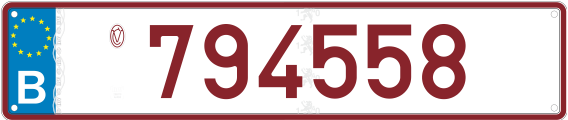
– Every personalized combination shall include at least 1 letter, because license plates ranging from 1 to 999 are reserved for the Royal Household. An exception exists for pre-1954 vehicles that were equipped with red-on-white enamel plates with a number ranging between 1000 and 999999: their owners can reclaim the right to use the original registration number on the condition that they prove that the vehicle was once registered under the said number.
– The following combinations are forbidden in order to avoid confusion with plates that could be issued in the future:
– Combinations starting with the isolated letters CD (e.g. CD-001, CD-1-US) are forbidden in order to avoid the confusion with diplomatic license plates
– The following combinations are forbidden in order to avoid confusion with plates used by ministers and members of the different Belgian parliaments:
Special case (1): the 'semi-personalisation' (cases where the choice of the registration is not actually free):
– people who still own a pre-European license plate (e.g. 631-BSU) will be able to keep their registration number for a 1000 euro fee (perhaps for a 500 euro fee in the future)

– [NOT POSSIBLE AS OF 31 MARCH 2014] people who wish to re-use a registration number that belonged to them or to a member of their family can pay a 500 euro fee to be allowed to use that number again. Let us imagine that you would like to pay a tribute to your grandfather whose license plate number was 32-B-32; if you have evidence of this and you pay 500 euros, you can get the right to drive around with the same registration. [NOT POSSIBLE AS OF 31 MARCH 2014]

– [NOT POSSIBLE AS OF 31 MARCH 2014] people who wish to re-use a registration number that used to be on a given car (as evidenced by an official document) can pay a 500 euro fee to be allowed to use that number again. Let us imagine that you have proof that your 1955 Corvette was first equipped with 1.D.873, you can get the right to drive around with the same registration. [NOT POSSIBLE AS OF 31 MARCH 2014]
Special case (2): vanity plates for oldtimers
– so far, owners of vehicles aged 25 or more who wanted a vanity plate had to chose a combination whose group of letters started with an O (e.g. ONE-001, 911-OOO, 9-OXK-140 or 9-009-OOO).
– since oldtimers are subject to a series of rules (e.g. no commercial use), the police wanted to be able to identify them easily via their plates. Instead of once again imposing a combination starting with an O, it was decided to add a red 'OLDTIMER' sticker below the DIV's official seal.

Special case (3): owners of pre-31 March 2014 vanity plates
– if you own a license plate issued between 1995 and 15 November 2010, you can pay 30 euro to get a European duplicate of your registration number (original proof of payment might be needed)
– if you own a license plate issued between between 16 November 2010 and 30 March 2014, you can pay 30 euro to get a duplicate of your registration number without index digit 9
Changing a registration completely (e.g. changing 004-FUN or 9-004-FUN to 4-FUN) will not be possible unless you pay a 1000 euro fee. However, it is not excluded that this option could become available in the future.
Real-life examples:
– Ordinary vanity plates (1000 euros):

– Oldtimer vanity plates (with red sticker):

– Vanity plate based on a disused number (the dash in the middle should not be there):

– Ordinary vanity plates; square format (340mm x 210mm):


– Ordinary vanity plates; small format (210mm x 140mm)

– A set of vanity plates:

Thanks to initiatives taken by a few license plate afficionados, State Secretary for Mobility Melchior Wathelet has decided to allow a nearly total freedom in the choice of a vanity plate.
Golden rule: any combination consisting of 1 to 8 characters is allowed. Every letter, digit and dash counts as 1 character; between each (group of) letter(s) and (group of) digit(s) comes a dash.
Every vanity plate shall start with the DIV's official seal ('CV' for 'circulation' and 'verkeer'), just to the right of the Belgian Euroband. The personalized combination will be centered on the remaining white space, as examplified by the following renderings:
(Note that the CV seal on B-17 should be a bit more to the left.)
Furthermore, it will be possible to add a dash between two digits, or between two letters to create words, e.g.
Restrictions:
– Every personalized combination shall include at least 1 letter, because license plates ranging from 1 to 999 are reserved for the Royal Household. An exception exists for pre-1954 vehicles that were equipped with red-on-white enamel plates with a number ranging between 1000 and 999999: their owners can reclaim the right to use the original registration number on the condition that they prove that the vehicle was once registered under the said number.
– The following combinations are forbidden in order to avoid confusion with plates that could be issued in the future:
- 4 letters followed by 3 digits (e.g. GLAD-001: this combination is already used by tractors [dashes are not taken into consideration in the database])
- 3 digits followed by 4 letters (e.g. 123-AIDA: someday, there could be a 123-AID-A plate [index letter A and inversion of the combination])
- 4 digits followed by 3 letters (e.g. 2107-BEL: someday, there could be a 2-107-BEL plate [ordinary license plate with index digit 2 and inversion of the combination])
- 3 letters followed by 4 digits (e.g. USA-0407: someday, there could be a USA-040-7 plate [ordinary license plate with index digit 7])
– Combinations starting with the isolated letters CD (e.g. CD-001, CD-1-US) are forbidden in order to avoid the confusion with diplomatic license plates
– The following combinations are forbidden in order to avoid confusion with plates used by ministers and members of the different Belgian parliaments:
- A-0 to A-999999 [federal ministers, state ministers, high-ranked judges, province governors, heads of ministries and cabinets]
- E-0 to E-999999 [regional and community ministers, directors of staff]
- P-0 to P-999999 [members of the Senate, Chamber of Representatives, Flemish Parliament, Walloon Parliament, Brussels Parliament, European Parliament]
Special case (1): the 'semi-personalisation' (cases where the choice of the registration is not actually free):
– people who still own a pre-European license plate (e.g. 631-BSU) will be able to keep their registration number for a 1000 euro fee (perhaps for a 500 euro fee in the future)
– [NOT POSSIBLE AS OF 31 MARCH 2014] people who wish to re-use a registration number that belonged to them or to a member of their family can pay a 500 euro fee to be allowed to use that number again. Let us imagine that you would like to pay a tribute to your grandfather whose license plate number was 32-B-32; if you have evidence of this and you pay 500 euros, you can get the right to drive around with the same registration. [NOT POSSIBLE AS OF 31 MARCH 2014]
– [NOT POSSIBLE AS OF 31 MARCH 2014] people who wish to re-use a registration number that used to be on a given car (as evidenced by an official document) can pay a 500 euro fee to be allowed to use that number again. Let us imagine that you have proof that your 1955 Corvette was first equipped with 1.D.873, you can get the right to drive around with the same registration. [NOT POSSIBLE AS OF 31 MARCH 2014]
Special case (2): vanity plates for oldtimers
– so far, owners of vehicles aged 25 or more who wanted a vanity plate had to chose a combination whose group of letters started with an O (e.g. ONE-001, 911-OOO, 9-OXK-140 or 9-009-OOO).
– since oldtimers are subject to a series of rules (e.g. no commercial use), the police wanted to be able to identify them easily via their plates. Instead of once again imposing a combination starting with an O, it was decided to add a red 'OLDTIMER' sticker below the DIV's official seal.
Special case (3): owners of pre-31 March 2014 vanity plates
– if you own a license plate issued between 1995 and 15 November 2010, you can pay 30 euro to get a European duplicate of your registration number (original proof of payment might be needed)
– if you own a license plate issued between between 16 November 2010 and 30 March 2014, you can pay 30 euro to get a duplicate of your registration number without index digit 9
Changing a registration completely (e.g. changing 004-FUN or 9-004-FUN to 4-FUN) will not be possible unless you pay a 1000 euro fee. However, it is not excluded that this option could become available in the future.
Real-life examples:
– Ordinary vanity plates (1000 euros):
– Oldtimer vanity plates (with red sticker):
– Vanity plate based on a disused number (the dash in the middle should not be there):
– Ordinary vanity plates; square format (340mm x 210mm):
– Ordinary vanity plates; small format (210mm x 140mm)
– A set of vanity plates:
(Edited on 26 March 2014 according to an official DIV document.)
Subscribe to:
Posts (Atom)


